The Observation
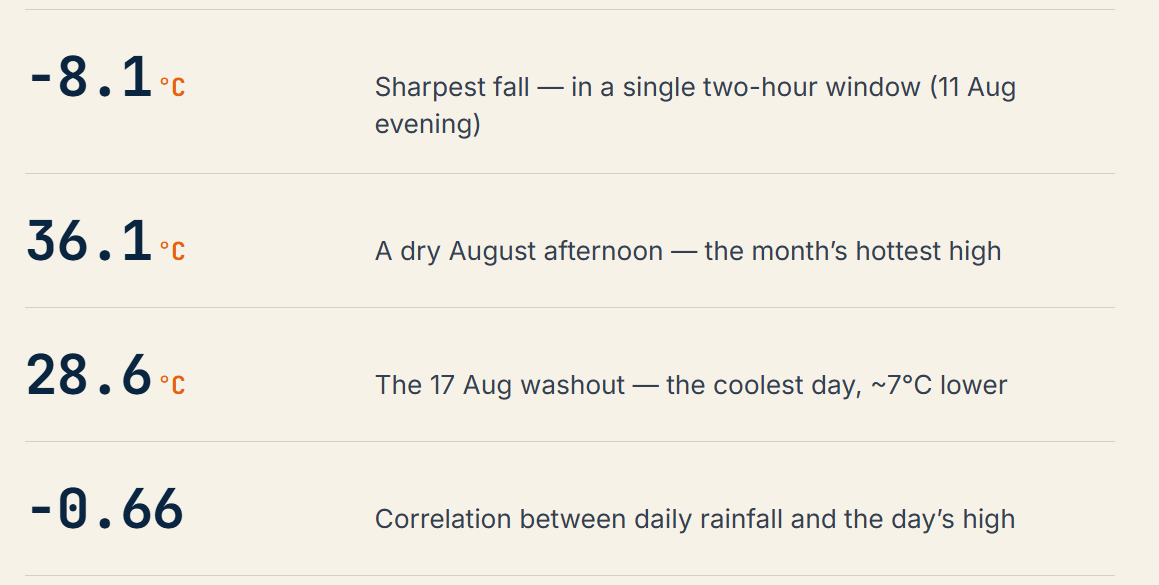
August in Islamabad is a fight between two forces: the sun, which pushes the mercury past 36°C on a clear afternoon, and the monsoon, which keeps showing up to knock it back down. This month, the monsoon kept winning.
The station’s temperature trace tells the story cleanly. Every time it rained, the heat collapsed sometimes within minutes. Across the whole period, more rain reliably meant a lower daily high, a correlation of −0.66.
The Evidence, Plotted
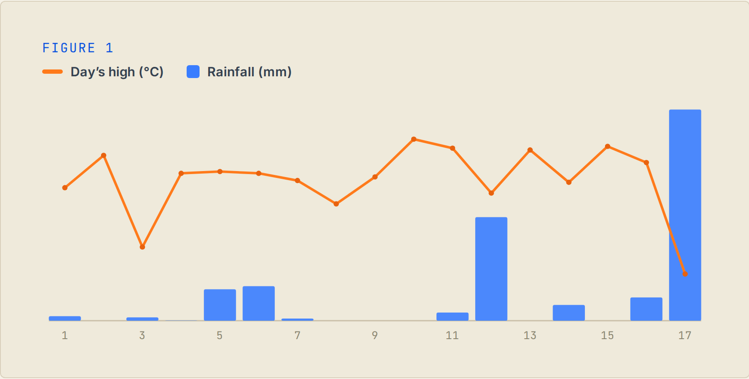
Fig. 1: Daily rainfall against the day’s high, 1–17 August 2026. The two biggest downpours (12 & 17 Aug) line up with the two lowest highs; the 17 Aug washout bottoms out at 28.6°C.
By The Numbers

Why it Happens
A storm cools the air through three mechanisms working together. Evaporating raindrops pull heat straight out of the air as they fall and land on hot surfaces. Cold downdrafts drag chilled air down from high in the cloud, spilling a pool of cool air across the ground.
And the cloud deck itself blocks the sun that was driving the heat in the first place. The catch: the relief is brief. Humidity barely moves, so the air stays muggy and because most storms strike overnight, they rarely dent the next afternoon’s peak.
The Takeaway
The monsoon is the city’s most powerful cooler.
It just runs on rain, not electricity and it charges by the storm. For a few cool hours after every downpour, Islamabad gets the most effective air conditioning it will ever have. Then the sun returns, and the fight starts over.