

Every year, as rain and warmth settle over our cities, dengue cases begin to climb. The disease spreads through the bite of a small mosquito that lives right alongside us and breeds in the tiniest pockets of water around our homes.
In this blog, we look at the mosquito behind dengue, where it breeds, how the weather sets the stage for an outbreak, the symptoms to watch for, and the simple steps that keep it in check.
Meet the culprit: Aedes aegypti
Dengue is carried by the Aedes aegypti mosquito, and its habits are what make it so effective at spreading the disease:
- It bites by day. It is most active in the early morning and late afternoon, unlike the night-biting mosquitoes that spread malaria.
- It breeds in containers. It lays its eggs in small pockets of standing water, not in large open water bodies.
- It lives close to people. It thrives in towns and cities, resting indoors and around homes and schools.
- It loves warm, humid weather. These conditions speed up its lifecycle and keep it active for longer.
Small water, big risk
A bottle cap of water is enough for this mosquito to breed. These are the places it most often finds one:
- Household containers: buckets, drums and coolers left uncovered.
- Discarded items: old tires, bottles and cans that never fully dry.
- Roofs and gutters: clogged gutters that hold water after rain.
- Construction sites: tanks and pits with uncovered water.
- Plant saucers: water trapped under potted plants indoors.
- Vehicle parts and covers: wheelbarrows and tarps that collect rainwater.
How weather fuels dengue season
Dengue is closely tied to the weather. Four conditions work together to turn an ordinary season into a dengue season:
- Warm weather speeds up the mosquito's lifecycle, from egg to biting adult.
- Humid air helps adult mosquitoes live longer and stay active for more of the day.
- Rain spells fill containers and low spots, giving mosquitoes fresh places to lay eggs.
- Lingering water is what turns rain into risk. Water left standing for days becomes a nursery.
Together, these conditions drive a simple cycle that repeats with every rain spell:
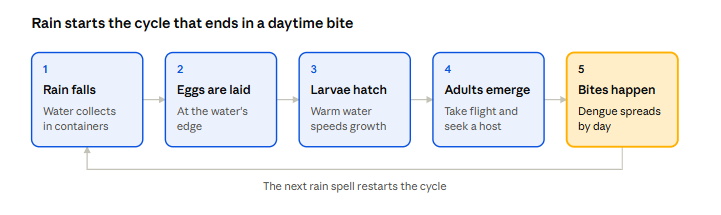
Breaking the cycle at the start, by removing standing water, is the most effective way to stop it.
Know the symptoms
Dengue often begins like a bad flu. Watch for:
- High fever
- Severe headache
- Pain behind the eyes
- Joint and muscle pain
- Skin rash
- Mild bleeding, such as from the nose or gums, in severe cases
If you or someone in your family develops these symptoms during dengue season, see a doctor promptly and get tested. Don't self-medicate: avoid aspirin and ibuprofen unless a doctor advises them, as they can worsen bleeding.
Prevention starts at home
The best defence against dengue is to stop the mosquito from breeding in the first place:
- Empty and cover: empty, scrub and cover water-storage containers every week.
- Clear debris: remove old tires, bottles and cans that collect rainwater.
- Protect yourself: use repellent, wear full sleeves, and screen windows and doors.
- Report clusters: inform local health authorities if several cases appear nearby.
The takeaway: prevention doesn't stop at your gate
A mosquito bred in a neighbour's bucket can bite you just as easily as one from your own. Dengue prevention works only when it reaches the whole street:
- At home: check for standing water every week and keep containers covered.
- In the community: clear shared spaces, streets, drains and vacant lots.
- At work or school: report clogged gutters and uncovered tanks to facilities staff.
